

News Summary
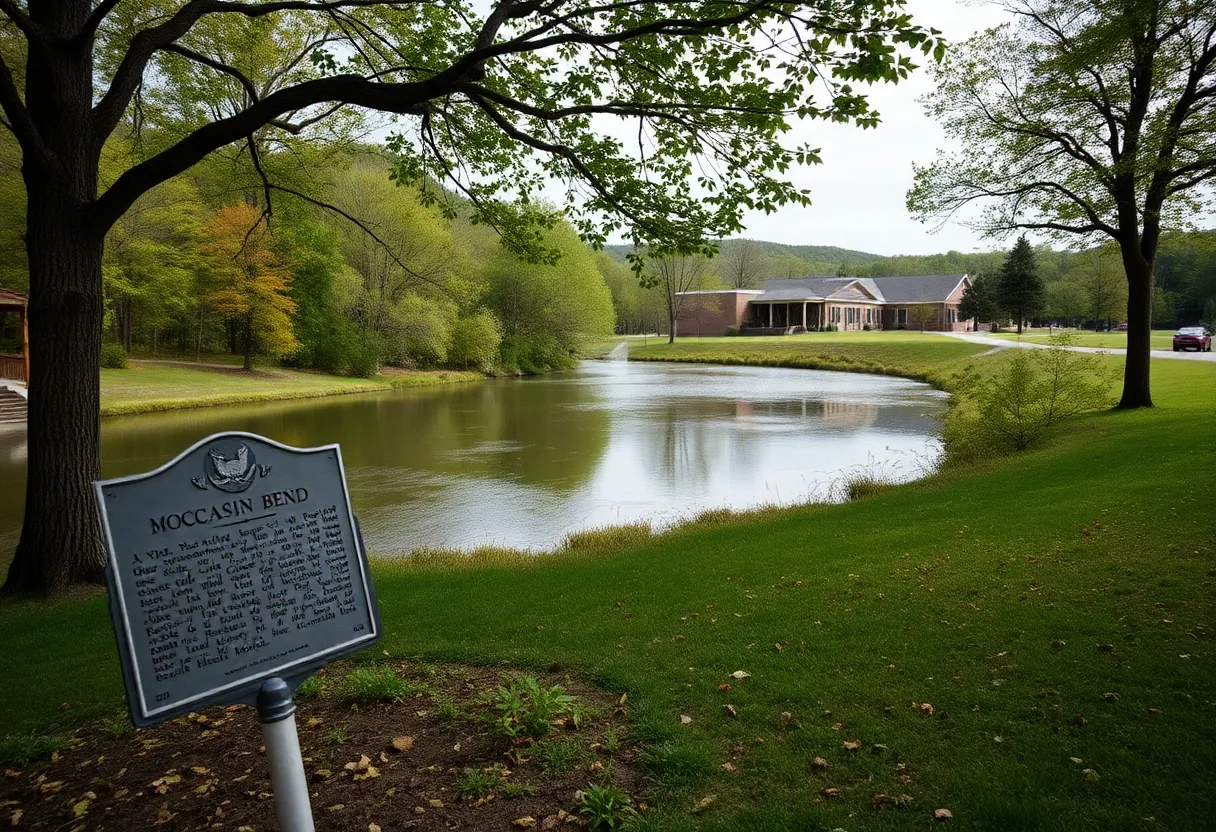
In Chattanooga, plans for a new mental health facility at Moccasin Bend are sparking debate among residents who are reflecting on the area’s painful history tied to the Cherokee Removal. The local community is concerned about balancing modern mental health needs with historical remembrance, as the Eastern Band of Cherokee Indians opposes the facility. A new park and memorial wall have also been unveiled to commemorate the 175th anniversary of the Cherokee Removal, shedding light on this tragic chapter in history.
Chattanooga’s Complex History: Cherokee Removal and New Plans for Mental Health Facility
In the heart of Chattanooga, a city rich in history, a debate is bubbling up over plans for a new mental health facility at Moccasin Bend. This site, while looking forward to better mental health services, also bears the weight of a painful past—the removal of the Cherokee people during the infamous Trail of Tears. Residents and local groups are voicing their concerns, igniting discussions about remembrance, education, and community healing.
A Peek into History
Chattanooga’s history includes a dark chapter that many residents are now reflecting on. The late Dr. James Livingood, a prominent history professor at the University of Tennessee at Chattanooga, shed light on these events in his work, highlighting the role of Reverend J.F. Schermerhorn, a U.S. commissioner sent to negotiate a removal treaty with the Cherokee Nation back in the 1830s. This treaty, known as the Treaty of New Echota, was signed after a meeting held in December 1835. However, what’s surprising is that only about three percent of the Cherokee Nation attended, and crucially, no official representatives from the Cherokee government were present to sign it.
Despite being an agreement that ceded all Cherokee lands east of the Mississippi River in exchange for lands in the west and a $5 million bonus, it was widely condemned. The Cherokee people were outraged, arguing that the treaty was a sham, supported by just a few. Chief John Ross, along with national delegates, took action by presenting a petition with nearly 16,000 signatures to protest the treaty in Washington.
The Unfolding Crisis
The U.S. Senate’s slim approval of the treaty eventually led to its implementation, but not without resistance. Many Cherokee were unwilling to leave their ancestral lands, which resulted in military enforcement of the removal. Military force, led by Major General Winfield Scott, was deployed to ensure the relocation took place, and scenes in Chattanooga during this time were tragic. Ross’s Landing became one of several key sites where Cherokee were gathered for removal, but conditions were far from humane. A stockade and concentration camp were erected, providing little privacy or sanitation for those forced to stay there.
While some Cherokee chose to leave voluntarily, the majority resisted. By the time the relocation was fully enforced, only about 2,000 of the Cherokee Nation’s members had agreed to migrate. The hardest-hit leg of this painful journey was the one that would come to be known as the Trail of Tears, where thousands faced grueling conditions over a journey of approximately 5,045 miles through nine states and numerous hardships.
A Modern Controversy
Fast forward to today, and the historical significance of Moccasin Bend is at the center of a new debate. Local lawmakers are pushing forward with plans to build a mental health facility, aiming to provide essential services to the community. Despite the good intentions, many local groups have raised voices against the construction, highlighting the area’s historical implications linked to the Trail of Tears and its impact on the Cherokee Nation.
Recently, the Eastern Band of Cherokee Indians passed a resolution opposing the facility, emphasizing the need to understand and honor the land’s historical importance. To commemorate this complex history, a new park and memorial wall was unveiled marking the 175th anniversary of the Cherokee Removal, providing education about the removal itself and memorializing those who suffered through the turmoil. The park includes a visitors center, wildlife shelter, and a stone map tracing the routes taken during the Trail of Tears, making it a significant space for reflection.
Moving Forward Together
As the plans for the mental health facility at Moccasin Bend move ahead, the city of Chattanooga finds itself at a crossroads—balancing the needs of its present community with the respect for its historical past. With ongoing discussions and community engagement, there’s hope that this debate can be a catalyst for healing, understanding, and education, allowing residents to learn from history while paving the way for a more compassionate future.
Deeper Dive: News & Info About This Topic
HERE Resources
Chattanooga Embraces Playground Design with Meghan Talarowski
Mooresville High School Student Charged with Conspiracy
Chattanooga Faces Rise in Crime: Community Concerns Grow
Judge Rules Trump Administration in Violation of Court Order
Chattanooga Aims to Become North America’s First National Park City
Chattanooga Launches Future Fund for Young Learners
Foreign Aid Freeze Causes Global Humanitarian Chaos
Apple Named World’s Most Admired Company for 18th Year
Chattanooga Community Unites Amidst Challenges
D’Ante Jones Convicted of Second Degree Murder in Chattanooga
Additional Resources
- Times Free Press: Local History – Cherokee Resist But Ultimately Face
- Local 3 News: Trail of Tears Memorial Wall Opens to the Public
- NewsChannel 9: Cherokee Tribe Seeks to Halt Construction of New Moccasin Bend Facility
- History.com: Trail of Tears – Conditions for the Cherokee
- Encyclopedia Britannica: Trail of Tears Routes


Author: STAFF HERE CHATTANOOGA WRITER
The CHATTANOOGA STAFF WRITER represents the experienced team at HEREChattanooga.com, your go-to source for actionable local news and information in Chattanooga, Hamilton County, and beyond. Specializing in "news you can use," we cover essential topics like product reviews for personal and business needs, local business directories, politics, real estate trends, neighborhood insights, and state news affecting the area—with deep expertise drawn from years of dedicated reporting and strong community input, including local press releases and business updates. We deliver top reporting on high-value events such as Riverbend Festival, Chattanooga Oktoberfest, and Moon River Festival. Our coverage extends to key organizations like the Chattanooga Area Chamber of Commerce and United Way of Greater Chattanooga, plus leading businesses in manufacturing, insurance, and utilities that power the local economy such as Volkswagen Chattanooga, BlueCross BlueShield of Tennessee, and EPB. As part of the broader HERE network, including HEREBristol.com, HEREKnoxville.com, HEREMemphis.com, and HERENashville.com, we provide comprehensive, credible insights into Tennessee's dynamic landscape.