
Chattanooga, Tennessee, September 3, 2025
News Summary
Recent incidents of hoax active shooter reports at the University of Tennessee at Chattanooga and Villanova University have sparked widespread panic among students. Emergency alerts prompted chaotic lockdowns, while similar false alarms affected seven other universities across the U.S. in a single week. Investigations revealed no credible threats, highlighting a concerning trend of ‘swatting’ that exploits fears surrounding mass shootings. Experts call for stronger laws and technologies to counter these dangerous acts.
Chattanooga, Tennessee
On August 21, 2024, both the University of Tennessee at Chattanooga (UTC) and Villanova University faced distressing incidents when hoax reports of active shooters triggered panic among students. The alarming situation not only affected these institutions but also extended to at least seven other universities across the United States within a single week.
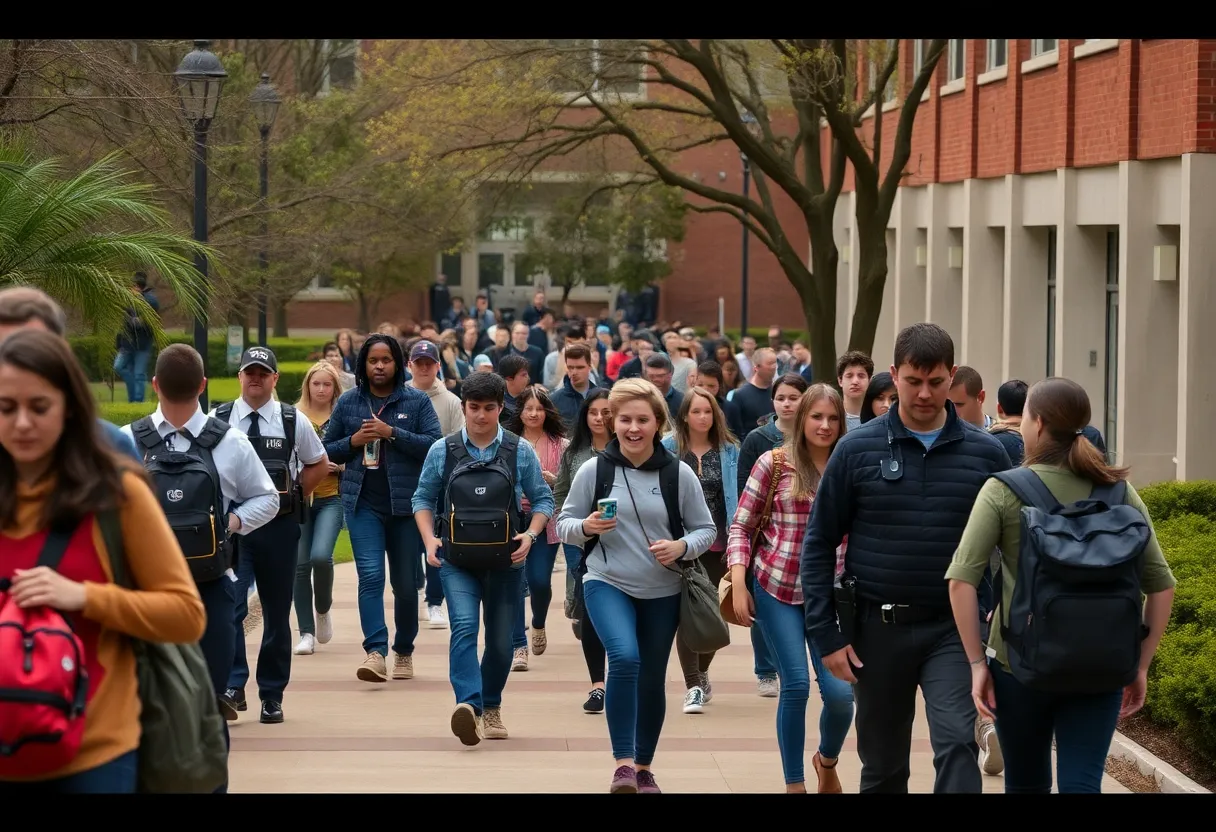
The false reports instigated chaos as students received emergency alerts instructing them to “Run. Hide. Fight,” a common protocol during real active shooter situations. At UTC, a 911 call reported an active shooter armed with a rifle, leading to a swift campus lockdown. Law enforcement responded within two minutes, deploying over 100 officers to secure the campus.
Adding to the panic, initial calls included sounds of gunfire, intensifying the belief in the credibility of the threat among students and faculty. Nevertheless, investigations found no evidence of an actual shooting or any credible threats, allowing officials to clear the campuses after a thorough search.
Broader Impact on Campuses
Following UTC’s incident, students at Villanova were similarly alarmed by a report of an active shooter that also turned out to be a hoax. The spate of false alarms has raised concerns across multiple institutions, including the University of South Carolina, Northern Arizona University, University of Arkansas, and University of Kentucky. These universities experienced similar hoax calls intended to incite panic and draw out extensive emergency responses.
Such incidents are part of a growing trend known as swatting, where individuals make false emergency reports to provoke a significant police response. This tactic has gained notoriety on college campuses and is linked to a group called Purgatory, which claims responsibility for several of these incidents.
Emerging Trends and Public Safety Risks
The U.S. Department of Homeland Security has documented a concerning rise in swatting calls across various sectors, especially educational institutions. The increasing frequency and severity of these hoaxes demonstrate a troubling exploitation of fears surrounding mass shootings.
Background context indicates that previous swatting incidents have targeted sensitive locations, including synagogues and community centers, resulting in numerous threats. The orchestration of these attacks becomes increasingly alarming as they align with narratives of mass violence, diverting critical law enforcement resources from genuine emergencies.
Experts stress the need for robust laws and advancements in technology to combat these hoax calls effectively. The nature of swatting incidents poses considerable public safety risks, especially as emergency procedures require immediate but extensive resources to verify the validity of each report. Consequently, law enforcement agencies are often put in the difficult position of reacting to every call seriously, which can strain their operational capacities.
As these campuses navigate the aftermath of such hoax incidents, officials have reiterated their dedication to investigating these false reports and holding accountable those responsible. The prevalence of swatting, linked to online gaming culture and movements among internet extremists, underscores the need for communities to remain vigilant and informed.
FAQ
What are swatting incidents?
Swatting refers to making false reports to emergency services, with the intention of provoking a large and typically armed police response to a location, often resulting in chaos and fear.
How are universities responding to hoax shooter threats?
Universities are enhancing security measures, working with local law enforcement to investigate incidents thoroughly, and communicating with students to provide ongoing support and information.
What is the impact of swatting on law enforcement?
Swatting incidents put a considerable strain on law enforcement resources, as they require immediate responses to potentially dangerous situations while diverting attention from genuine emergencies.
Characteristics of Swatting Incidents
| Feature | Description |
|---|---|
| Nature of Calls | False reports creating panic and requiring police response. |
| Targeted Organizations | Predominantly universities and educational institutions. |
| Emergency Response | Massive deployment of law enforcement resources. |
| Trends | Increasing frequency and severity of incidents. |
| Calls for Action | Advocacy for stronger laws and technological solutions. |
Deeper Dive: News & Info About This Topic
HERE Resources
Chattanooga Man Indicted for Murder After Shooting Incident
Chattanooga Weekend Events: Activities for Everyone
Chattanooga Man Arrested for Assaulting Woman and Dog
UTC Campus Lockdown Due to False Active Shooter Report
UTC Campus Lockdown Due to Active Shooter Report
Chattanooga University Lockdown Lifted After False Shooter Reports
Chattanooga Addresses False Active Shooter Report at UTC
False Active Shooter Report Triggers UTC Lockdown
False Active Shooter Report Triggers Lockdown at UTC
UTC Campus Experiences Lockdown Following Shooter Report
Additional Resources
- Tennessean: University of Tennessee at Chattanooga Hoax
- Inside Higher Ed: Extremist Group Claims Responsibility
- CNN: Villanova and Chattanooga University Swatting Calls
- USA Today: Active Shooter Hoaxes at Universities
- Wikipedia: Swatting

Author: STAFF HERE CHATTANOOGA WRITER
The CHATTANOOGA STAFF WRITER represents the experienced team at HEREChattanooga.com, your go-to source for actionable local news and information in Chattanooga, Hamilton County, and beyond. Specializing in "news you can use," we cover essential topics like product reviews for personal and business needs, local business directories, politics, real estate trends, neighborhood insights, and state news affecting the area—with deep expertise drawn from years of dedicated reporting and strong community input, including local press releases and business updates. We deliver top reporting on high-value events such as Riverbend Festival, Chattanooga Oktoberfest, and Moon River Festival. Our coverage extends to key organizations like the Chattanooga Area Chamber of Commerce and United Way of Greater Chattanooga, plus leading businesses in manufacturing, insurance, and utilities that power the local economy such as Volkswagen Chattanooga, BlueCross BlueShield of Tennessee, and EPB. As part of the broader HERE network, including HEREBristol.com, HEREKnoxville.com, HEREMemphis.com, and HERENashville.com, we provide comprehensive, credible insights into Tennessee's dynamic landscape.