

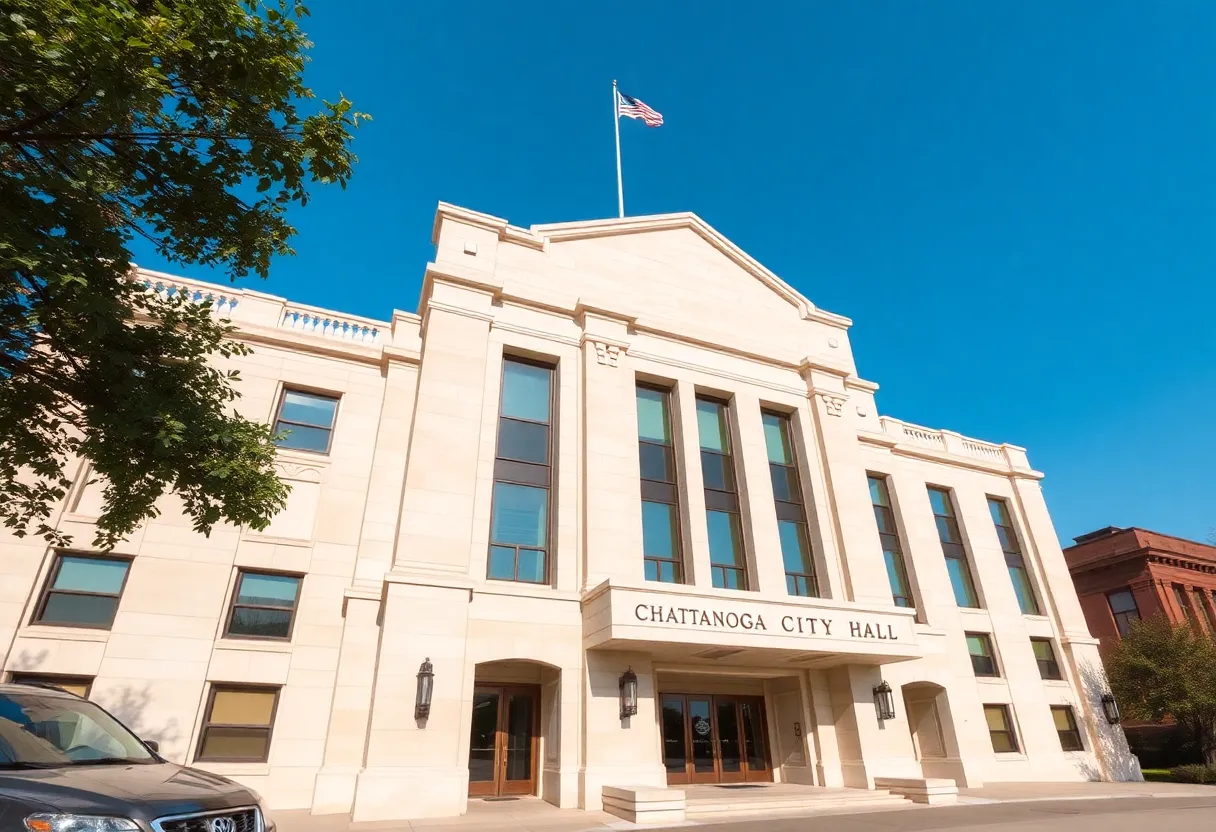
Chattanooga, TN, August 17, 2025
News Summary
Chattanooga’s City Hall represents the city’s evolution from early governance at Poe’s Tavern to a modern architectural landmark. Established in 1909, the structure showcases significant design features that reflect Chattanooga’s journey, including influences from the Cherokee Removal. This article delves into Chattanooga’s rich history and the architectural advancements symbolized by the City Hall.
Chattanooga’s City Hall: A Historical Journey from Humble Beginnings to Modern Architecture
Chattanooga serves as a prime example of a city’s evolution and its governance roots, having navigated through multiple phases of development since it first began as the fourth seat of Hamilton County government. The current City Hall, located at 11th and Lindsey streets, symbolizes this transition, showcasing modern architecture that stems from humble beginnings.
Early Governance and Settlements
The origins of governmental operations in Chattanooga can be traced back to early gatherings at Poe’s Tavern in Soddy, which eventually prompted several relocations to Dallas and Harrison. The late 1790s marked a crucial era when settlers began to encroach on the southern shore of the Tennessee River, despite previous agreements with the Cherokee Nation. Following the Treaty of New Echota in 1835, Hamilton County’s boundaries extended southward to include Ross’s Landing.
The Cherokee Removal in 1838 was a significant turning point that facilitated a gradual increase in population in what would soon evolve into the city of Chattanooga. Progress continued into the 1840s, with a modest influx of settlers, although most chose to remain in northern Hamilton County. By 1870, Chattanooga was established as the final seat of county government and rapidly expanded in the years following the Civil War, largely attracting former Union soldiers seeking new economic opportunities, earning the city the label as the “Gateway to the South.”
Establishment of City Hall
Before its current location, Chattanooga’s City Hall operated from three distinct sites. The first City Hall was situated at Market and Fourth streets and was later repurposed as the Militia Armory. Subsequently, the city rented space at Georgia Avenue and Market Square. The third City Hall served as a municipal hall after originally functioning as a city market, later transferred to the Chattanooga Police Department.
The construction of the current City Hall began when Alexander W. Chambliss purchased the site, and contracts were awarded in December 1907 during Mayor William L. Frierson’s tenure. The building was officially dedicated in August 1909, with Mayor William R. Crabtree overseeing the ceremony. The architectural plans created by R.H. Hunt were integral to the design, with the selection of a classic version that did not include a domed rotunda, yet offered large windows for natural lighting, ultimately improving operational conditions.
Design Features and Modernization
The design of the City Hall features a main entrance facing Eleventh Street, constructed of light-colored stone and complemented by a smaller entrance on A Street. Inside, the lobby and corridors are adorned with marble flooring, enhancing the building’s aesthetic while also serving a functional purpose. Furthermore, the architecture incorporated both electric and gas lighting, showcasing adaptability to new technological advancements.
As the details about the new City Hall emerged, local excitement grew, marking a significant period in Chattanooga’s history. It is important to recognize the evolution of governance and the architectural advancements that chronicle the city’s journey from its initial settlement to a modern urban environment.
Historical Significance
Chattanooga’s history reflects a tapestry of settlement, governance, and architectural developments over time. The city’s establishment involved navigating complex relationships with Indigenous populations, war repercussions, and adapting to new economic realities. With Linda Moss Mines serving as chair of the regional America 250 Commemoration and as a historian for the region, the historical importance of Chattanooga continues to be celebrated and recognized.
FAQ Section
What role did Chattanooga serve in Hamilton County’s government history?
Chattanooga became the fourth seat of Hamilton County government, eventually establishing itself as the final seat in 1870.
When was the current City Hall in Chattanooga dedicated?
The current City Hall was dedicated in August 1909.
Who designed the current City Hall in Chattanooga?
The current City Hall was designed by architect R.H. Hunt, who submitted two designs before the final version was chosen.
What features does the current City Hall have?
Features include large windows for natural light, marble flooring, electric and gas lighting, and a classic architectural design.
How did the Cherokee Removal impact Chattanooga’s growth?
The Cherokee Removal in 1838 led to increased settlement and population growth in the region around Chattanooga.
Key Features
| Feature | Detail |
|---|---|
| Initial Years of Governance | Poe’s Tavern in Soddy, followed by moves to Dallas and Harrison. |
| Cherokee Removal Impact | Increased population following the removal in 1838. |
| City Hall Locations | Three locations before the current site: Market and Fourth, Georgia Avenue, City Market. |
| Current City Hall Dedication | Dedicated in August 1909, designed by R.H. Hunt. |
| Main Features | Large windows, marble flooring, electric, and gas lighting. |
Deeper Dive: News & Info About This Topic
HERE Resources
Chattanooga Organizations Awarded $15,000 in Funding for Community Initiatives
San Francisco’s Million-Dollar Housing Market Surges
Chattanooga Mayor Proposes Historic Property Tax Reduction
Chattanooga Zoning Panel Denies Cupcake Kitchen’s Bakery Expansion Request
Chattanooga Welcomes New Embassy Suites Hotel
Chattanooga’s Downtown Thrives with New Business Openings
President Trump Intensifies Measures Against Homeless Encampments
Tennessee Blind Business Owners Oppose House Bill 1066
Chattanooga’s Annual Chatt Town Cool Down Returns
Chattanooga Reports High Office and Retail Occupancy Rates
Additional Resources
- Times Free Press: Chattanooga’s 1907 Plans for a New City Hall
- Wikipedia: Chattanooga
- Times Free Press: Scenes from Chattanooga’s Past
- Encyclopedia Britannica: Chattanooga
- Nooga Today: Moccasin Bend Saved from Development
- Google Search: Chattanooga History
- Local 3 News: TN Governor Bill Lee Competes in Chattanooga Triathlon
- Google News: Chattanooga Government


Author: STAFF HERE CHATTANOOGA WRITER
The CHATTANOOGA STAFF WRITER represents the experienced team at HEREChattanooga.com, your go-to source for actionable local news and information in Chattanooga, Hamilton County, and beyond. Specializing in "news you can use," we cover essential topics like product reviews for personal and business needs, local business directories, politics, real estate trends, neighborhood insights, and state news affecting the area—with deep expertise drawn from years of dedicated reporting and strong community input, including local press releases and business updates. We deliver top reporting on high-value events such as Riverbend Festival, Chattanooga Oktoberfest, and Moon River Festival. Our coverage extends to key organizations like the Chattanooga Area Chamber of Commerce and United Way of Greater Chattanooga, plus leading businesses in manufacturing, insurance, and utilities that power the local economy such as Volkswagen Chattanooga, BlueCross BlueShield of Tennessee, and EPB. As part of the broader HERE network, including HEREBristol.com, HEREKnoxville.com, HEREMemphis.com, and HERENashville.com, we provide comprehensive, credible insights into Tennessee's dynamic landscape.